
February 4th, 2019
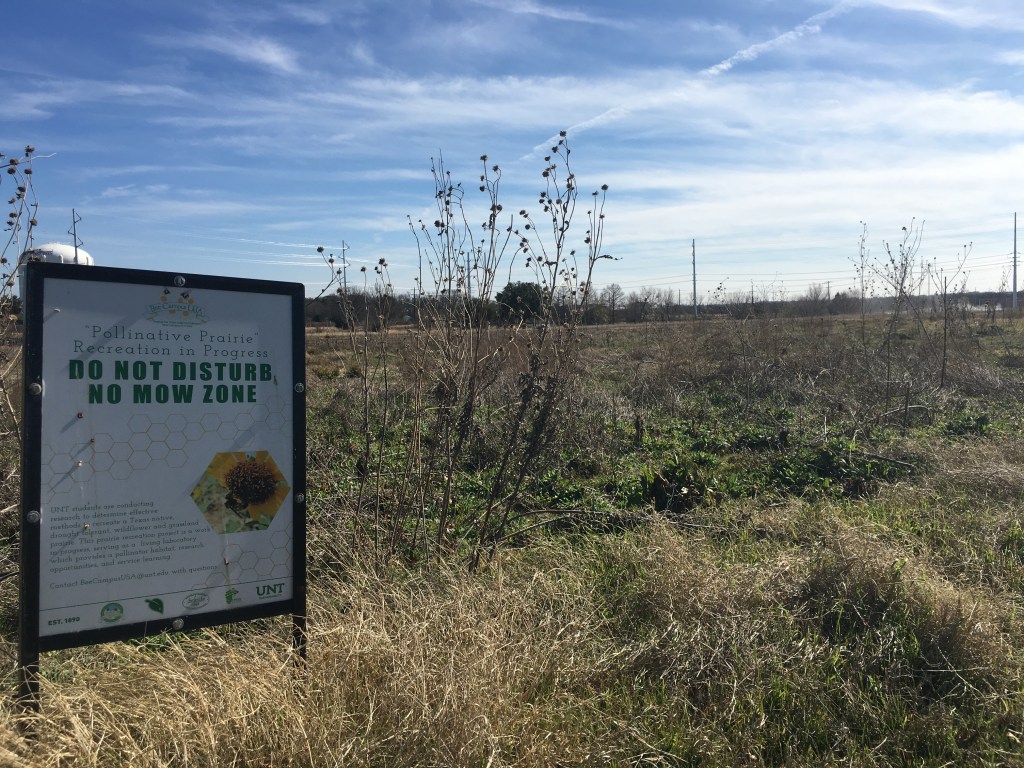
It may look like an abandoned garden with weeds to passersby, but it houses many plant pollinators especially during the spring. Dried up native Texas tall grass makes up this 4-acre prairie recreation located at the University of North Texas Discovery Park.
UNT was the first in Texas to be recognized as a bee campus and is now 1 of 6 Bee Campus USA participants that create a safe and diverse pollinator friendly environment.
Environmental Science lab supervisor at the University of North Texas, Dr. Jamie L. Baxter-Slye, has served on the Bee Campus USA committee for the last two years.
The initial idea came from Dr. Slye’s friend, Jennifer Bailey from grad school. The idea was to turn an invasive grassland known as Bermuda grass into a native Texas prairie. However, the project was made possible by associate director of sustainability Gary Cocke.
Working on pest management to keep a pollinator-friendly environment is one of the keys to becoming a bee campus.
“It’s been shown that bees, if they pollinate something with a neonicotinoid herbicide, then it gets into their systems and it’s one of the factors that cause that bee colony collapse disorder,” said Dr. Slye.
It is through the incorporation of friendly herbicide practices and many helping hands that this project has continued to show the success.
UNT community garden employee and member of the We Mean Green fund, Maggie Brookshire, is a part of the growing success of Bee Campus USA. The We Mean Green fund also helped fund and make the project possible.
“The garden wasn’t founded as a Bee Campus USA, but we have a garden and we wanted to get the campus designation,” said Brookshire.
As a bee campus, UNT provides more than just a habitat for bees, it also provides volunteer workshops on campus that raise pollinator awareness and sustainability. As an employee at the community garden, Brookshire attends the workshops and learns more sustainable practices.
Student volunteers like Brookshire that have attended the pollinator workshops have the opportunity to gain knowledge on the matter.
UNT biology major Kathaya Nhey, has never heard of Bee Campus USA or attended a workshop.
“I think that’s really cool because UNT is all about being environmentally friendly,” said Nhey.
The goal for the pollinator prairie is to expand to 4.5 acres of native grassland for the pollinators.
The wet season this time around did not allow for many improvements to be done, but they were able to seed one acre for this spring. The ground is said to be ready and prepared to do three acres of seeding and many volunteers will be called on to plant a grand total of 8,300 plants.
“The idea is that they would learn which plants are Texas native plants, how to plant them and what their importance is to pollinators, biodiversity and water conservation,” said Dr.Slye.
 JaeNews