Food in the spotlight; Angelina’s

Food from Angelina’s restaurant: chicken quesadillas, bacon wrapped shrimp and a side of sour cream and guacamole on a banana leaf

By: Jaelene Ramirez and Abram Gallegos

DENTON-

Social media has grown and evolved with time, but now it has an increasing impact on the way restaurants and other establishments plate their food.

We took a closer look at Angelina’s restaurant located in Corinth, Texas to see how they have adapted to the changes.

The family owned restaurant has been open for over thirty years. 

Restaurant manager Adriana Luna said she feels they depend on social media a lot now because that is where they receive most of their attention. 

“Now it’s shifted to ‘what can we post’, and it’s not even about coupons or discounting anymore. It’s more about these appealing pictures of what we have to offer to bring people in,” Luna said.

Angelina’s restaurant not only had to learn how to use the various social media platforms, Luna said they also had to learn to be better photographers. 

“We are still actively practicing what our market and what our customers want to see and we base that on views, and feedback that we get,” Luna said

A lot of social media posts are created for target audiences, Luna said most of their customers are couples or families. 

“I think that knowing your customers and knowing what they want [allows us to] put stuff out there and when we see them we’re like ‘we posted that just for you’ you know ‘we knew it was going to get your attention,” Luna said.

The social media pages for Angelina’s restaurant used to be run by the restaurant itself but now they have a professional to take care of the job.

“We were just posting when we thought it was good and sometimes it was a little  late so knowing what times to post and also knowing and understanding each platform and who looks at each one.”

When plating food for social media, Angelina’s found that certain techniques made their food look more appealing. 

Luna said they used to garnish their sour cream and guacamole with shredded iceberg lettuce and tomatoes but noticed it looked washed out when they started photographing the food.

The shredded iceberg lettuce that they used was quickly substituted by a bright green banana leaf.

“It just pops more, the color, so the sour cream doesn’t look so bland and the guacamole looks more vibrant,” Luna said.

The restaurant is now looking forward to expanding by opening up a new location where they plan to bring their knowledge of social media to bring in new customers.

However, Luna was quick to credit their loyal customers and said Angelina’s wanted to make sure they were a part of the process by sharing updates of their new location to social media. 

“We love new customers but if it wasn’t for our loyal customers this opportunity wouldn’t be possible,” Luna said.
Early voting on Denton bond propositions could help improve bike lane safety

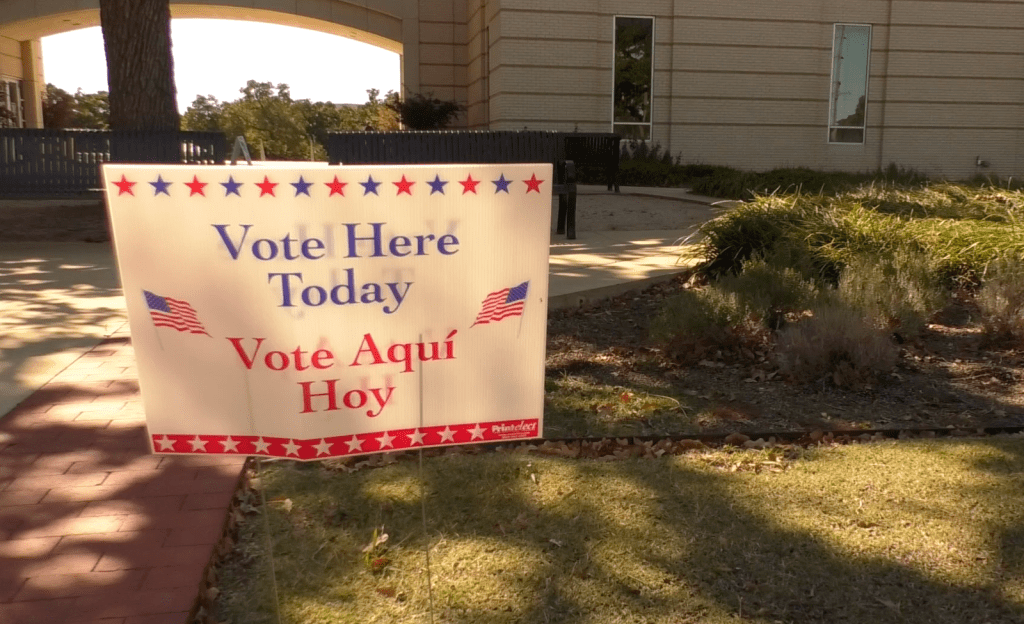
‘Vote here’ sign outside of the UNT Gateway building.

DENTON- Early voting in Denton is coming to an end November 1st. 

A member of bike Denton says that out of four bond propositions, one could help prevent a cyclist from being struck on the roadways.

Bike Denton member Eric Pruett says proposition C could provide improvements to parks and land for trails that are important to keep cyclists safe.

“Unfortunately, we’ve had people killed who were biking in this town,” Pruett said.

Pruett says that current bike lanes create an environment for cyclists where nothing feels safe.

“If you stop and think, most communities in the town, you can draw a box around by large fast food places that you wouldn’t want your kids biking along,” Pruett said. 

Aside from improvements on parks and land for trails, early voters in Denton will have a chance to vote on bonds related to street repairs, police department repairs, and securities for public art.

Although turn out for local elections are historically low, Pruett says he has hope for change.

“We have an opportunity to be able to say this is an important thing that we want our children and our parents and our grand parents to feel safe going to the places that we want to take them and that takes people getting behind it and making their voice head,” Pruett said.

New bilingual classroom

Teachers and children sitting on a mat inside UNT’s Child Development Laboratory School.

The University of North Texas’ Child Development Laboratory is opening a new bilingual classroom for three-year-old Spanish speakers.

The classroom is expected to open October 15th.

Dina Castro, who holds a degree in early childhood education says the idea for this program is to provide high quality early education for children coming from Spanish speaking homes with the long-term goal of bilingualism.

“We have the expectation to be able to support the children for 2 years while they are 3 and 4 years old at the CDL,” Castro said.

Castro believes it is important to incorporate bilingual programs such as this one so children in their developmental stages do not lose their abilities to speak, read and write in Spanish.

“We have families that are second, third generation that have already lost their Spanish,” Castro said “Precisely, one of the reasons why we are offering this program, is to prevent that from happening.”

Castro says this program is a way to provide support to parents and a way to show the benefits of bilingualism.

“Hopefully this program will also get more visibility in the community to bilingual families and make them feel supported and confident in supporting their kids to be bilingual,” Castro said.

More information:

  • Price for enrollment is based on income (“sliding scale”)
  • Contact dina.castro@unt.edu

Job positions available for bilingual students:

  • Assistant teacher
  • Receptionist (administrative and logistic information)

Mean green proposals

Students walking by the UNT student union.

DENTON- The University of North Texas’ We Mean Green Fund is now accepting project proposals that are environmentally focused.

The Project proposals that are due December 6th are meant to spark creativity by allowing the faculty, staff and students at UNT to bring their sustainable ideas to life.

Emily Bilcik, the WMGF project coordinator, said she thinks students should care because the way she sees it, the WMGF is owned by them.

“It’s really a great opportunity for anyone here to make a difference, make their green voice heard here at UNT and why not do it if you have the opportunity,” Bilcik said.

The funding was made possible in 2010 by the Student Government Association who put out a vote to start collecting an environmental service fee.

As part of their tuition, students pay an environmental service fee of $10 per academic year that goes towards the fund for environmental projects

The WMGF has since collected the service fee and has as much as $260,000 to put towards sustainability efforts for the years 2019-2020.

“It was by student support and has been since 2010,” Bilcik said “so ten years strong of environmental project proposals through community driven efforts.”

How to submit a project proposal

  • Go to greenfund.unt.edu
  • click on “propose a project”
  • fill out the pre-proposal form and submit!

Vape shops may not be to blame for lung disease

OUTSIDE OF DENTON VAPE SHOPPE LOCATED ON S LOCUS ST.

DENTON-

A vape shop in Denton said vaping products sold at local vape shops are not responsible for the lung disease epidemic that has been affecting young teenagers across the nation.

Denton vape shoppe employee, Brian Chesnut acknowledged there is a problem with the amount of teenagers with access to vape products, but said that does not mean a freedom meant for adults should be taken away.

Chesnut said the vape shop he works at has strict rules on products being sold.

The products that Denton vape shoppe sells are FDA approved.

The products Chesnut suggests are causing lung disease are unregulated products that are not FDA approved.

“Now instead of getting FDA regulated safe approved products [people] are buying bootleg vape juice from the guy on the corner,” Chestnut said.

An article on CNN, however, confirmed twelve US deaths due to vaping with the latest death in Mississippi.

The centers of disease control and prevention have also reported multiple states experiencing lung diseases associated with vaping.

Chestnut said vape shops across Denton are now in danger of shutting down because of a possible vaping ban.

He said he only wished people weren’t misinformed about vaping products.

“People buying stuff they don’t know about from people they don’t know about that’s not regulated would just magnify the problems and the sicknesses,” Chesnut said.

Huge planting day

Picture credits: Jaime Baxter-Slye
Sitting on the grass is Jaime Baxter-Slye with her son on her lap, Molly Burke and other volunteer that came out for the event.

DENTON- University of North Texas ecology students and Denton community members gathered for a huge planting day Saturday morning.

The planting day took place at UNT’s pollinative prairie located at Discovery Park. With about 800 Texas native plants to work with, community volunteers and students prepared for an all-day planting event.

The plants used for the event were a part of UNT student, Molly Burke’s, research project that aimed to see how different pot sizes affect plant root structures.

Organized by the Society for Ecological Restoration (SER) and funded by the We Mean Green fund, the planting day did not only benefit her research but also added a diversity of Texas native plants to the prairie.

“So it’s kind of a good way to sort of play around with plants and see how those root structures are growing naturally in their habitats and seeing how that’s affecting that plant survivorship,” Burke said.

The pollinative prairie is a 4-acres site, but Burke says her research plot takes up less than a quarter acre.

Burke has received help from Jaime Baxter- Slye ,Ph.D., who works at the University of North Texas as a lab instructor for environmental science.

Over the past two years, Slye says ecology students have been doing these kinds of work days and have successfully replaced Bermuda grass with over 100 different kinds of flowering plants and Texas native grasses.

Bermuda grass is one of the most commonly used grasses in Texas but it is not a native grass.

Slye said she hopes students and volunteers take home what they learned at the planting day so they can make their own small prairie at home.

“If you’ve got the opportunity to do something for the environment then you should do it. I had the opportunity to get some funding to plant Texas native plants and try to reconstruct a Texas native prairie and that’s what we’ve done here,” Slye said.

Future planting events to look forward to are being planned for fall of 2019 and predict a grand total of 7,000 plants for the pollinative prairie.

List of Texas prairie plants:

  • Green milkweed
  • Butterfly milkweed
  • Purple prairie coneflower
  • Indian grass
  • Big bluestem
  • Little bluestem

How to Identify plants and living organisms:

  • Download the iNaturalist app onto your phone
  • Take a picture of any plant with flowers, insects or any living organism
  • Post it on the iNaturalist app with a general name tag (flower, insect, tree..etc)
  • Wait for an expert to identify your plant or organism
  • And share your findings!

UNT virtual maze research study

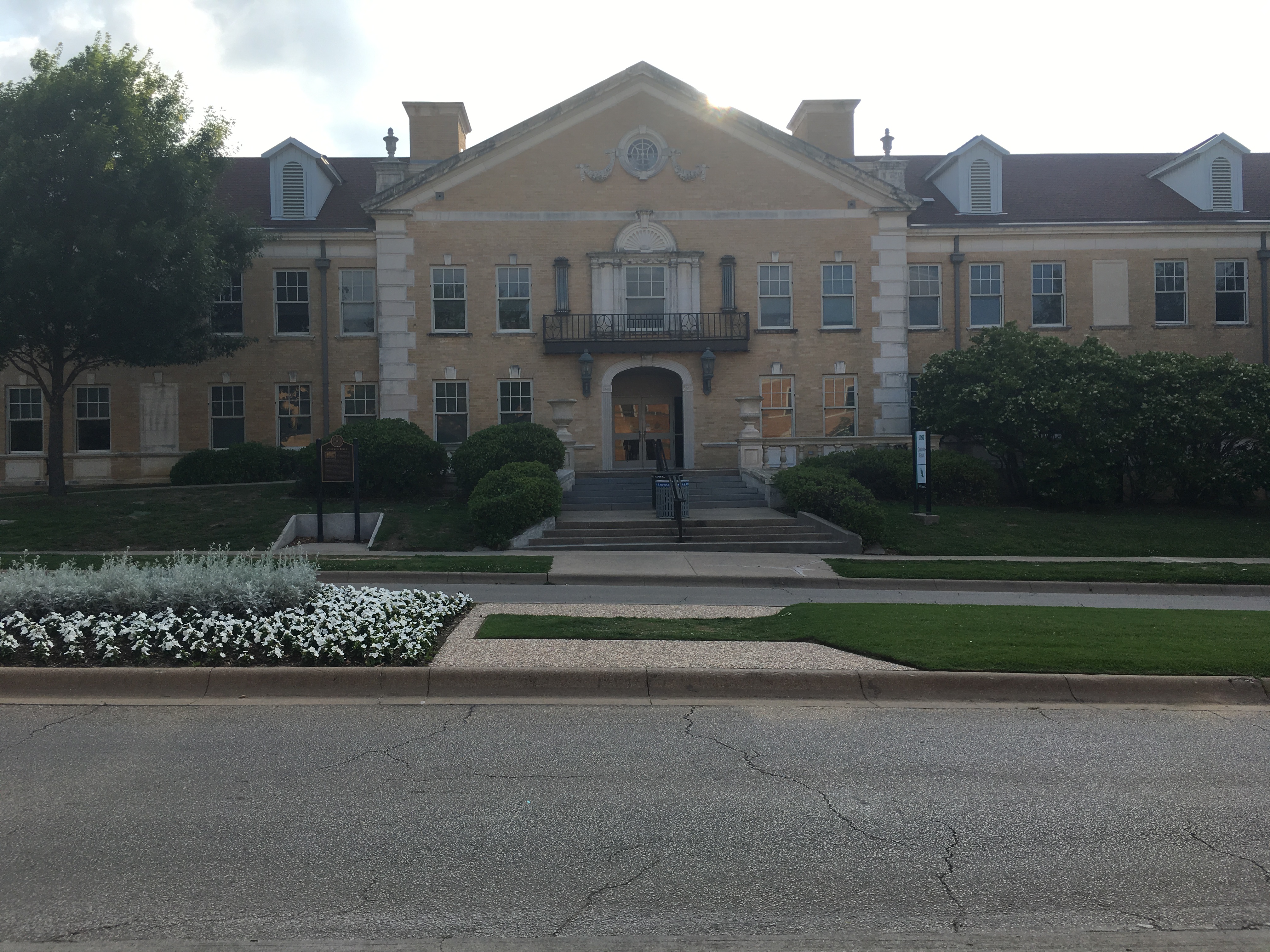
Chilton Hall located at The University of North Texas where the study is taking place.

DENTON- A virtual maze study conducted by a student at the University of North Texas has found a trend in the way people rely on their memory to get them places.

Oahn Luc, a student investigator for the research project created the virtual maze game along with the Department of Behavioral Analysis to study the effects environmental changes have on memory.

The project, first developed spring semester of 2018, is now collecting research data at Chilton Hall.

The results show a consistent trend in memory. Student participants initially use contextual cues or objects in their environment to make their way out of the maze.Then as students moved through each trial of the maze, they began to rely on their own sense of direction. It showed they began to rely on their own sense of direction.

“I think this is a novel way to investigate this sort of learning that might help contribute to the scientific literature at large and especially in bridging the two fields of behavior analytic methods and neuroscientific findings which is the goal, the end goal,” Luc said.

The virtual maze takes about 45 minutes to an hour to navigate. Student participants are also rewarded $10 for an hour of their time.

The goal is for participants to try to remember how to get to the end of the maze.

“We are hoping that this will shed light on things that were unexplained in these other fields that maybe we can help provide explanations,” Luc said.

Three degrees later

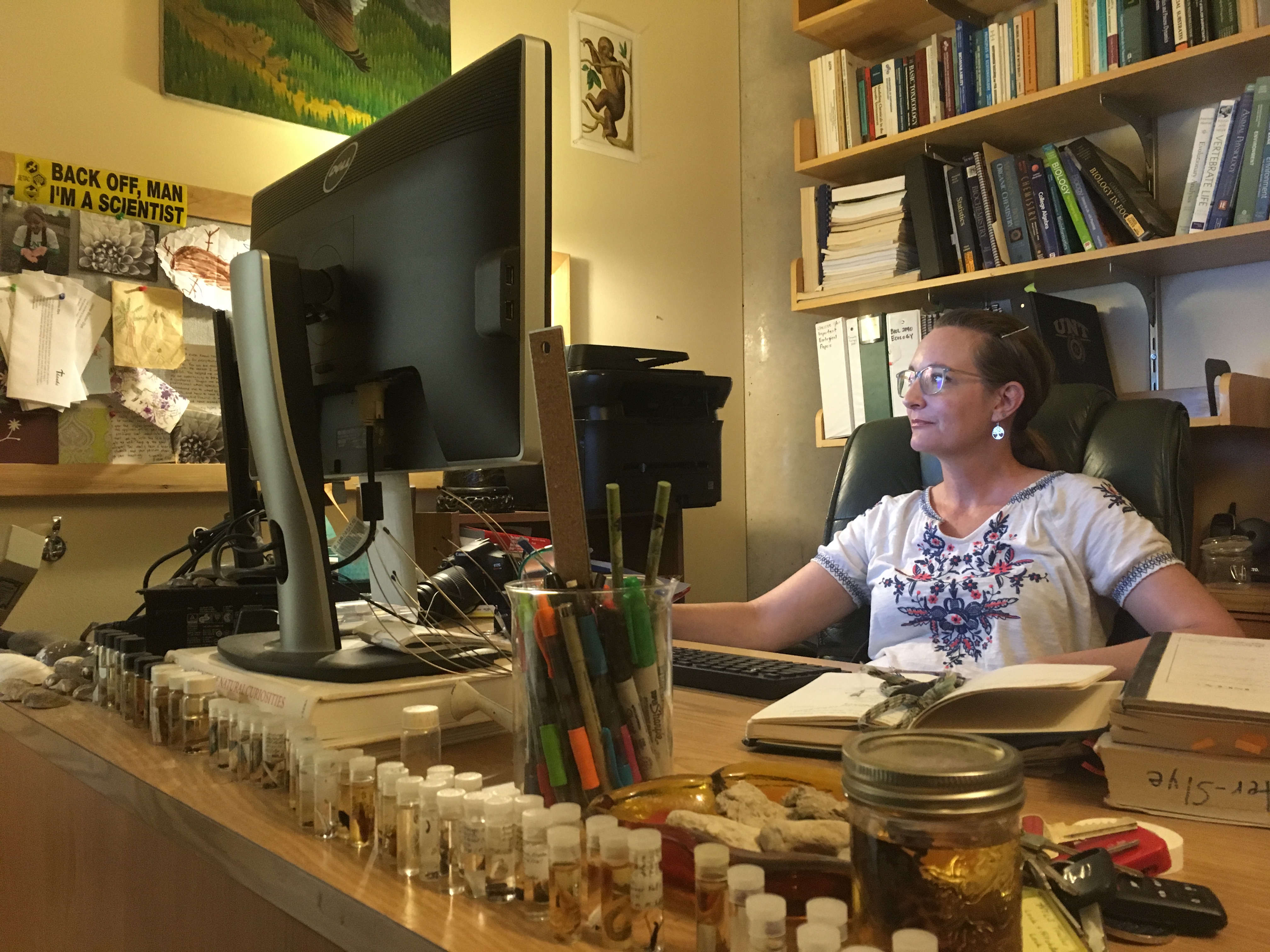
Jaime Baxter- Slye sitting in her office located in the Environmental Science Building.

DENTON- Labeled insect tubes, fossils, and family pictures line the office walls and shelves of Jaime Baxter- Slye, Ph.D.

Slye is an instructional lab supervisor at the University of North Texas teaching students biology and ecology.

Pinned to the bulletin board right next to her desk is a picture of her daughter.

“She is little there, she is so cool. I mean I say she is not into science but she was out with me that day teaching college students about aquatic insects with me,” Slye said.

Slye said her daughter, Chloe, grew up in the lab since she became pregnant with her a month after she would start her masters program.

Talking about her daughter makes her eyes light up.

Her journey to get to where she is today was not a smooth one but she says she is proud of how far she has come.

Spending her entire masters pregnant with her daughter, Slye said she never once questioned taking time off because she wanted her kids to see that they can be anything that they want to be.

Slye became pregnant with her son in 2010 and finished her Ph.D. at The University of North Texas in 2013.

“I think, too, that having my awesome kids at the same time as finishing all three degrees you know was a lot of work,” Slye said.

After Slye finished her dissertation, she was looking for a job when she noticed UNT was hiring for a lab supervisor.

James H. Kennedy Ph.D. professor of biological science became Slye’s Ph.D. mentor and witnessed Slye’s interest in labs.

“She had never done that kind of work but she was really interested and very enthusiastic about it so she jumped in with both feet and no background and really worked hard to get to where she is,” Kennedy said.

Deciding to take the job, Slye was really happy she had a lot of room to be creative in coming up with the labs for environmental and ecology classes.

“I can still remember my grandmother had this chalkboard whenever I was three or four years old and I played teacher all the time,”

Slye says she loved her teachers and thought that they were her heroes. She was also inspired to be like them and loved helping other people understand things.

“This job is the best of both worlds because my primary job is to develop a curriculum and to help and teach students,” Slye said. “But since it’s on ecology and environmental science and I have a love for nature, I can do fun projects.”

Impacting students’ lives was a result of her love for helping others.

Schyler Brown met Slye his second year at UNT as a music major.

Brown was considering switching his major to ecology and Slye played a part in his decision.

“Within the week I was planning on changing degrees in the third year of my college career,” Brown said.

Gaining connections and receiving pointers from Slye along the way Brown received good news.

“This year Dr. Slye nominated me for a United States Geological Survey internship. I applied, and was accepted,” Brown said.

For now, Slye is continuing as UNT’s lab supervisor for the labs she loves.

“I’ve been doing this since 2014, since then I have had some students graduate and get some really cool internships and jobs and that has been the most rewarding experience,” Slye said.

Interesting facts about Slye:

  • 2003 B.S. Texas A&M University – Kingsville, Biological Sciences, Marine Ecology
  • 2005 M.S. Texas A&M University – Kingsville, Biological Sciences, Parasitology
  • 2013 Ph.D. University of North Texas, Biological Sciences, Aquatic Ecology
  • Loves French cooking
  • And nature photography
  • Likes remote backpacking
  • Is learning to play guitar
  • Has a black poodle just like John Steinbeck
  • Likes to paint animals
  • Is teaching herself to knit
  • Likes to garden
  • Learned how to figure skate and ride horses when I was little
  • Has to go outside at least once a day
  • David Baxter is her best friend and husband
  • Favorite quote- “I am glad I will not be young in a future without wilderness.”  – Aldo Leopold A Sand County Almanac (1949)

Recent Technical Projects Slye Funded:

  • 2017 – Pecan Creek Pollinative Prairie. $156,998 grant from UNT Sustainability We Mean Green Fund. Principal Investigator.
  • 2016 – UNT Ecology Laboratory creation; American Kestrel Partnership and the Pollinative Prairie at Discovery Park. $6000 grant from UNT Sustainability We Mean Green Fund. Principal Investigator.

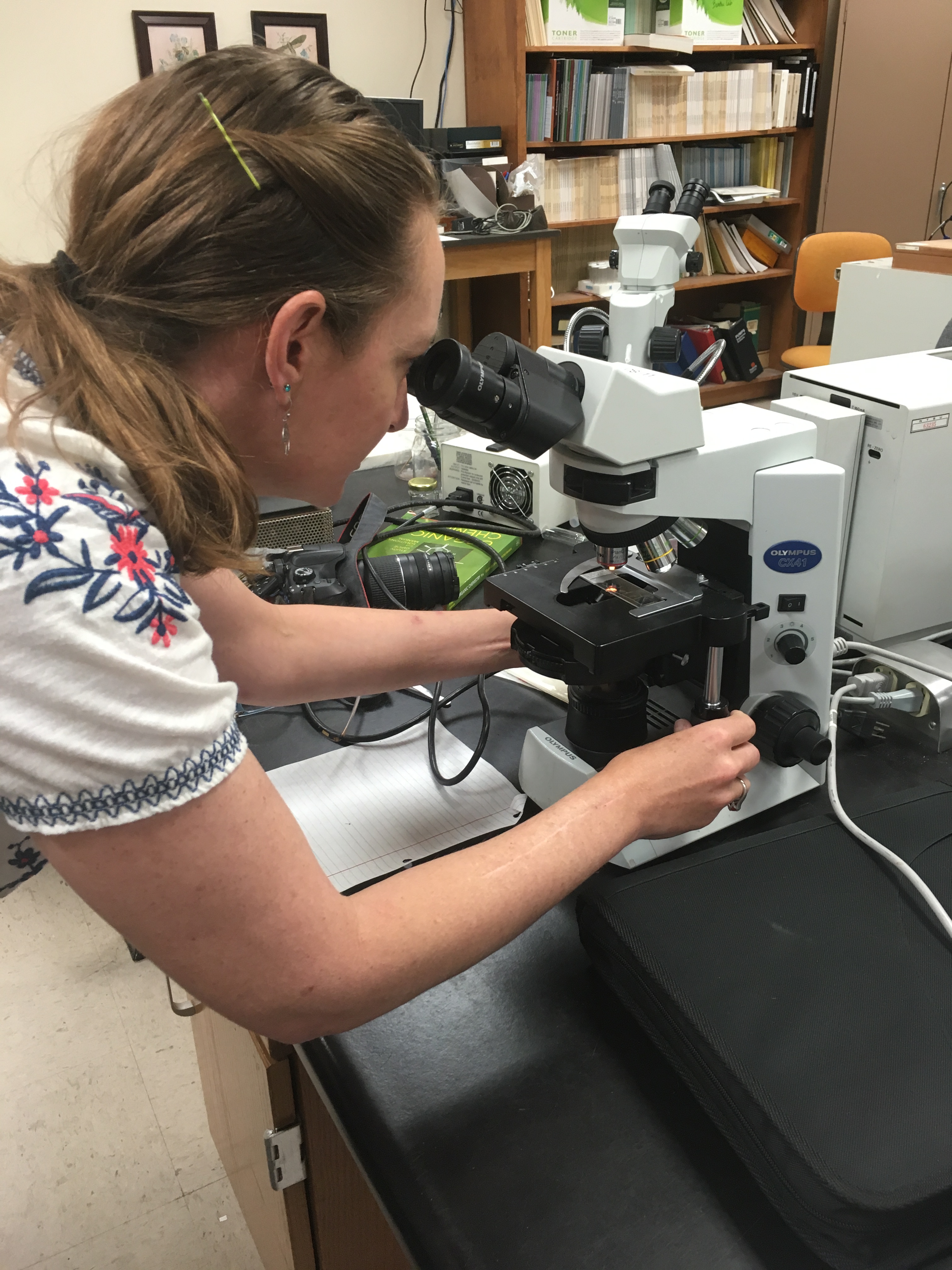
Jaime Baxter- Slye looking through a microscope in one of the labs she supervises.

West Hall’s intramural streak comes to an end

DENTON- The University of North Texas’ West Hall will not be winning the intramural overall sports cup they have held for four consecutive years.

With sports ranging from flag football, volleyball, soccer, basketball and softball, West Hall’s team captain, Steven Simpson said he’s lost hope in being able to keep the cup at their residence hall.

“We have only won one sport and the rest we have not done well in,” Simpson said.

Simpson says that if a residence hall wins at least two sports they are likely to win the cup.

West Hall had trouble starting up some of their sports teams, Simpson said the first softball game was forfeited because of the lack of players.

Scores for the overall sports cup are recorded differently because each win and playoff win is rewarded a certain amount of points.

Wins are rewarded two points while playoff wins are rewarded four points.

All points are added up between each hall and whoever has the most points wins the cup for the year and gets to display it at their residence hall.

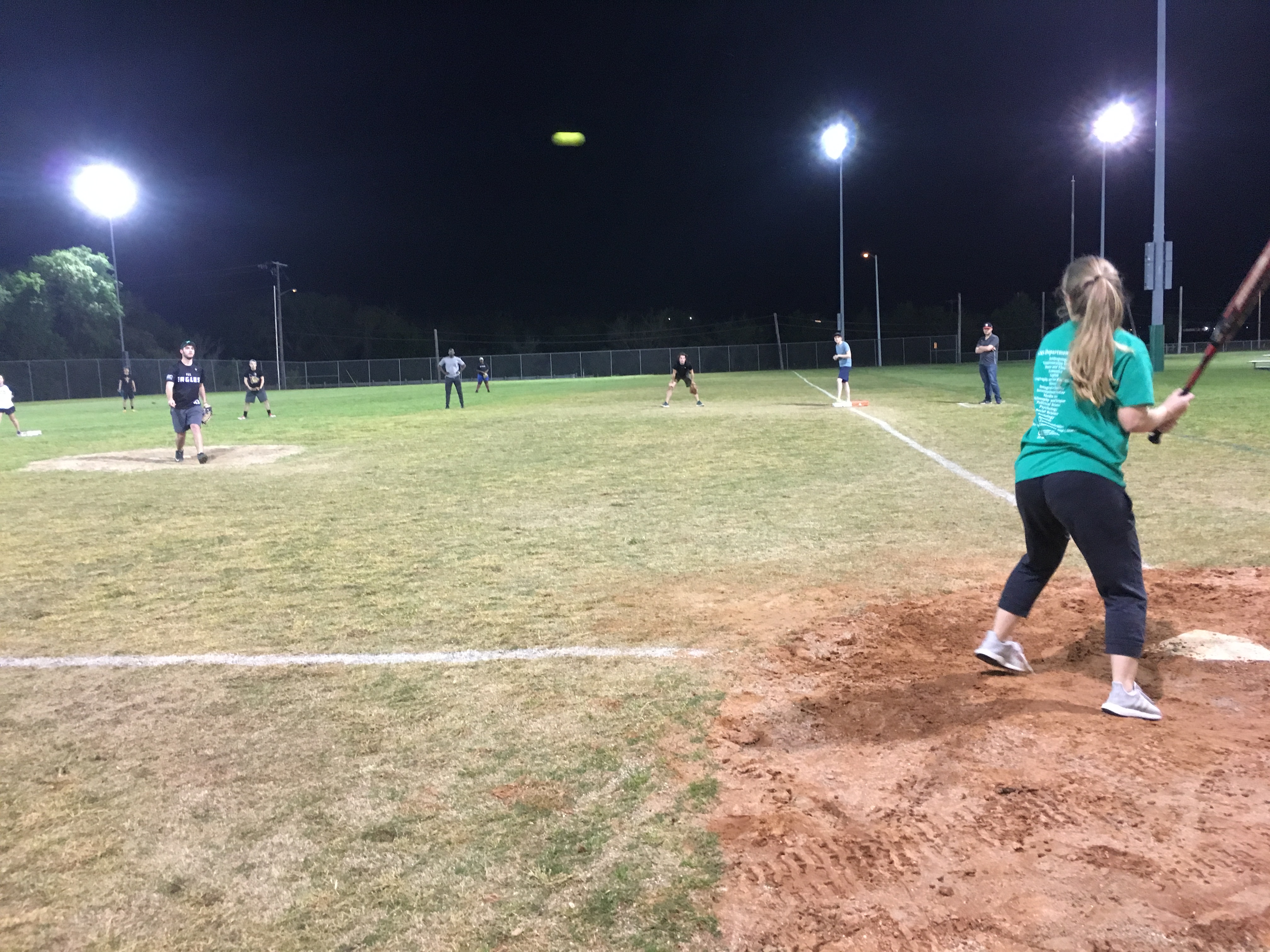
At one of West Hall’s most recent softball games, they played against Bruce Hall. The team lost to Bruce 12-4.

Dayani Davilla, West Hall resident and spectator attending her second softball game was not surprised West Hall did not win the cup.

“We were not competitive enough this year, I think the West spirit has gone down,” Davilla said.

The residence hall did not have as much participation this year compared to previous years Davilla said.

Davilla has lived at West Hall since 2018 and said the residence hall even started advertised more for intramural sports in hopes of getting more resident involvement.

Second baseman Edward Medina said more practice time as a team could have also helped.

Medina said he still despite the bad season, had fun playing in every game with his teammates.

“We had really great players and a lot of athletic players throughout the different seasons of different sports and it was fun to get to participate in that,” Medina said.

Although West Hall did not win this game, keeping a positive mindset was key for pitcher Thomas Moore.

“Whatever the score is, I don’t really let it get to my head,” Moore said.

The winner for the overall sports cup has yet to be announced but Simpson and the other players are certain that West Hall did not make the cut.

SEEDS Presents Wild Cat Expert

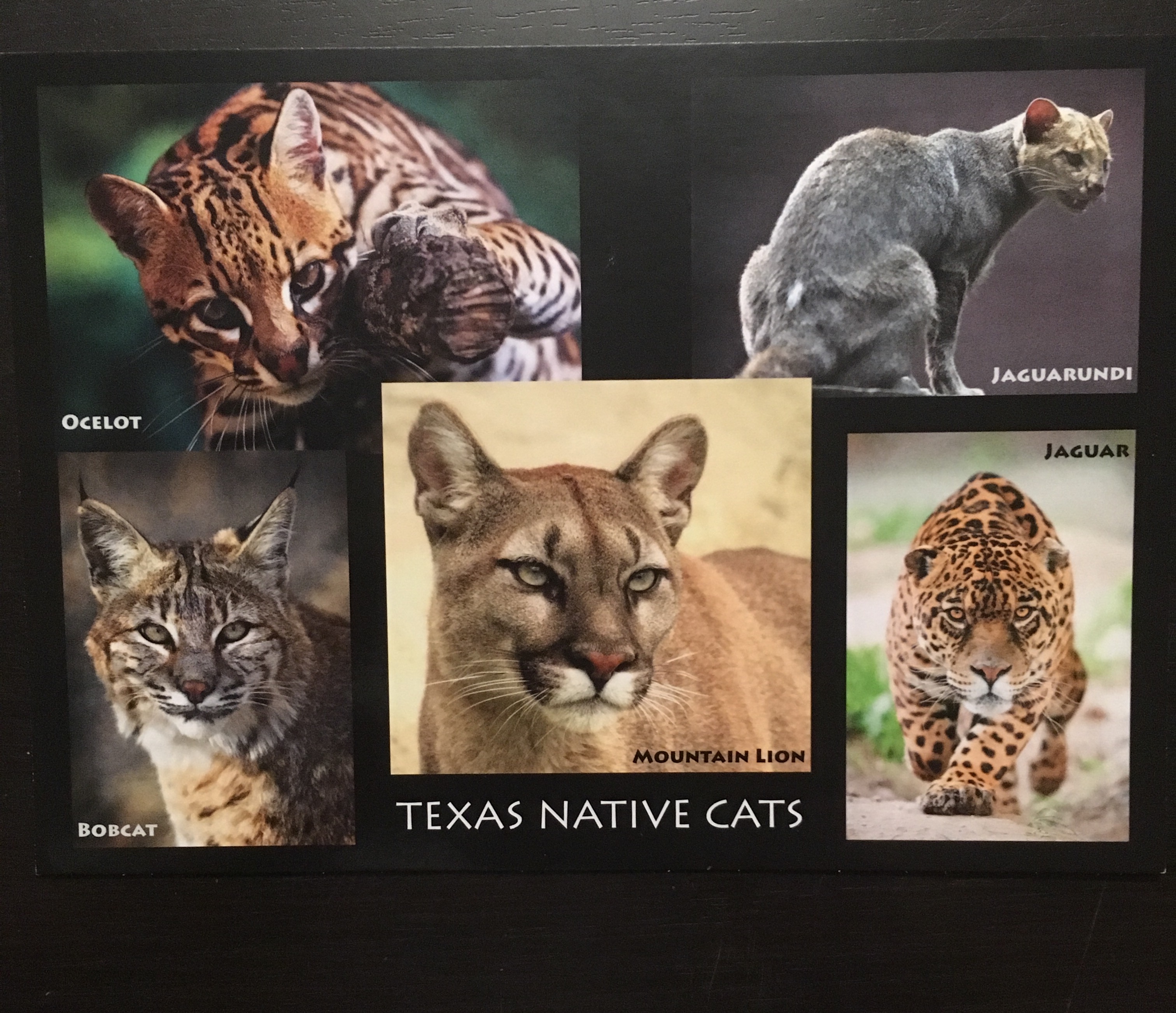
Texas Native Cats pamphlet provided by Monica Morris.
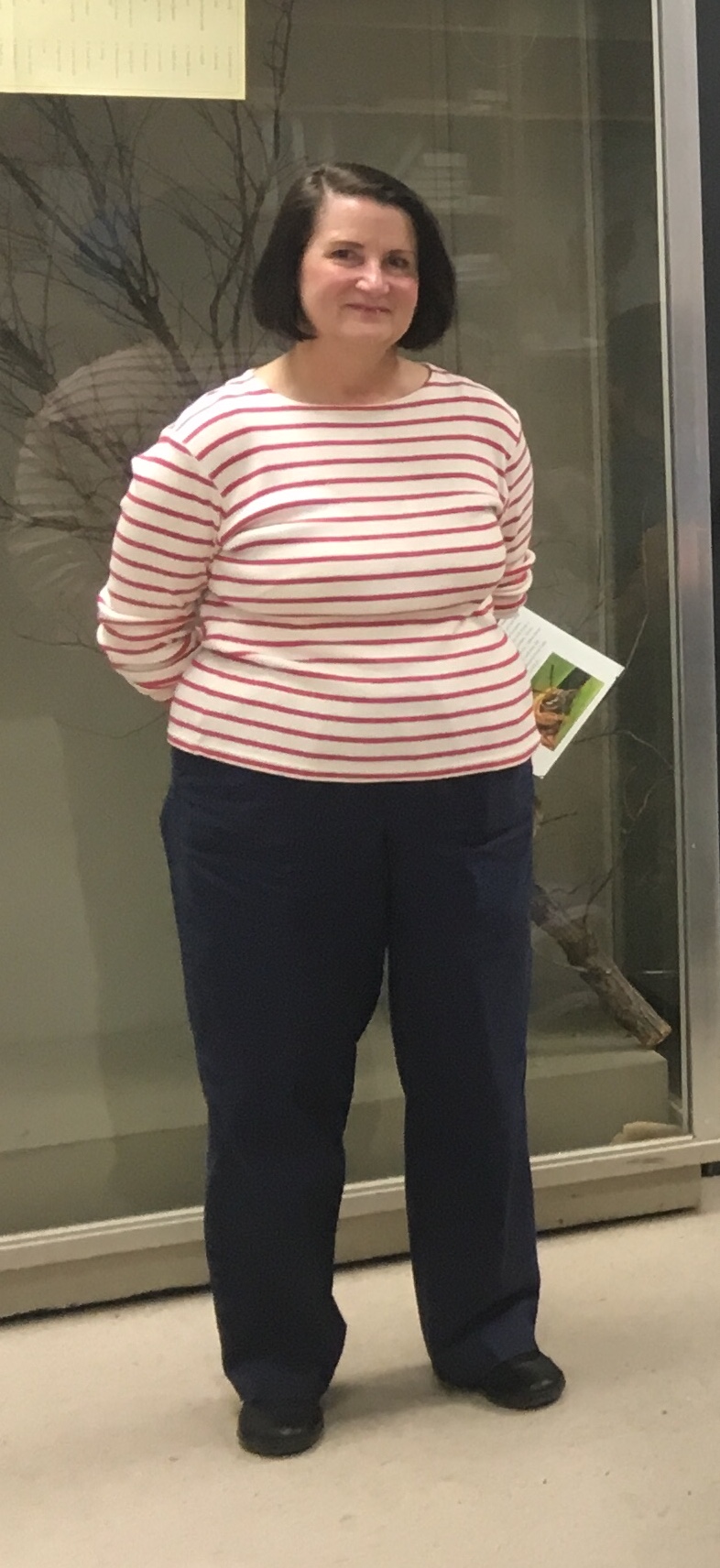
Monica Morrison getting ready to present.


DENTON- Texas native cats are often overlooked, endangered and receive little protection, said Texas native cats expert, Monica Morrison, who was a guest speaker Monday night by an ecology club at the University of North Texas.

As a club, Strategies for Ecological Education, Diversity and Sustainability (SEEDS) brings awareness to habitat and wildlife issues.

SEEDS also educates its members on various topics by inviting guest speakers and experts.

This week’s meeting in the Environmental Science Building was all about cats, the wild ones in Texas, who have no voice.

The small group who attended the meeting was shocked at some of the facts Morrison presented.

For example, the state can decide which species are game animals, so native cats can be killed at any time in Texas.

In one of Austin’s annual open meetings it was mentioned that “Commission has regulatory authority over non game species, so they can decide what regulations [Texans] require and don’t,” Morrison said.

Shannon Wallace, SEEDS club member, says she would like to work with animals in some way and was surprised with legislation concerning Texas native cats.

“Legislation had been brought up such a long time ago but nothing has happened,” Wallace said.

SEEDS president and ecology major, Schyler Brown, says he wasn’t aware of some wild cat facts.

“I was surprised most to hear that so little research has actually been done in the last decade on big cats,” Brown said.

Brown says he hopes club members found Morrison’s presentation interesting and looks forward to keeping in touch with her in the future.

“Guest speakers play an integral part of the club because they present project and research opportunities as well as real world problems to the members,” Brown said.

SEEDS may be a small club, but Brown says he hopes to bring in more students and increase diversity because it is predominantly made up of ecology students.

Nominations for new club officers will also be up soon because its current officers are mostly upperclassmen.

“I’ll be a part-time student next semester, and cannot be a part of a club so I need new officers,” Brown said.

WILD CAT FACT BOX:

  • What to do when you spot a wild cat- Make yourself bigger, throw sticks, growl, don’t crouch, and whatever you do, do not run!
  • More than 95 to 98 percent of land is privately owned in Texas
  • Land owners or people are a part of the reason for animal extinction and habitat loss.
  • We got rid of mountain lions in the eastern part of the United States in the early 1900s
  • Big cats can live 10 to 12 years in the wild and up to 20 years in captivity.
  • We need predators, they are essential to ecology.
  • Big cats can live ten to twelve years in the wild and up to twenty years in captivity.
  • We need predators, they are essential to ecology.