
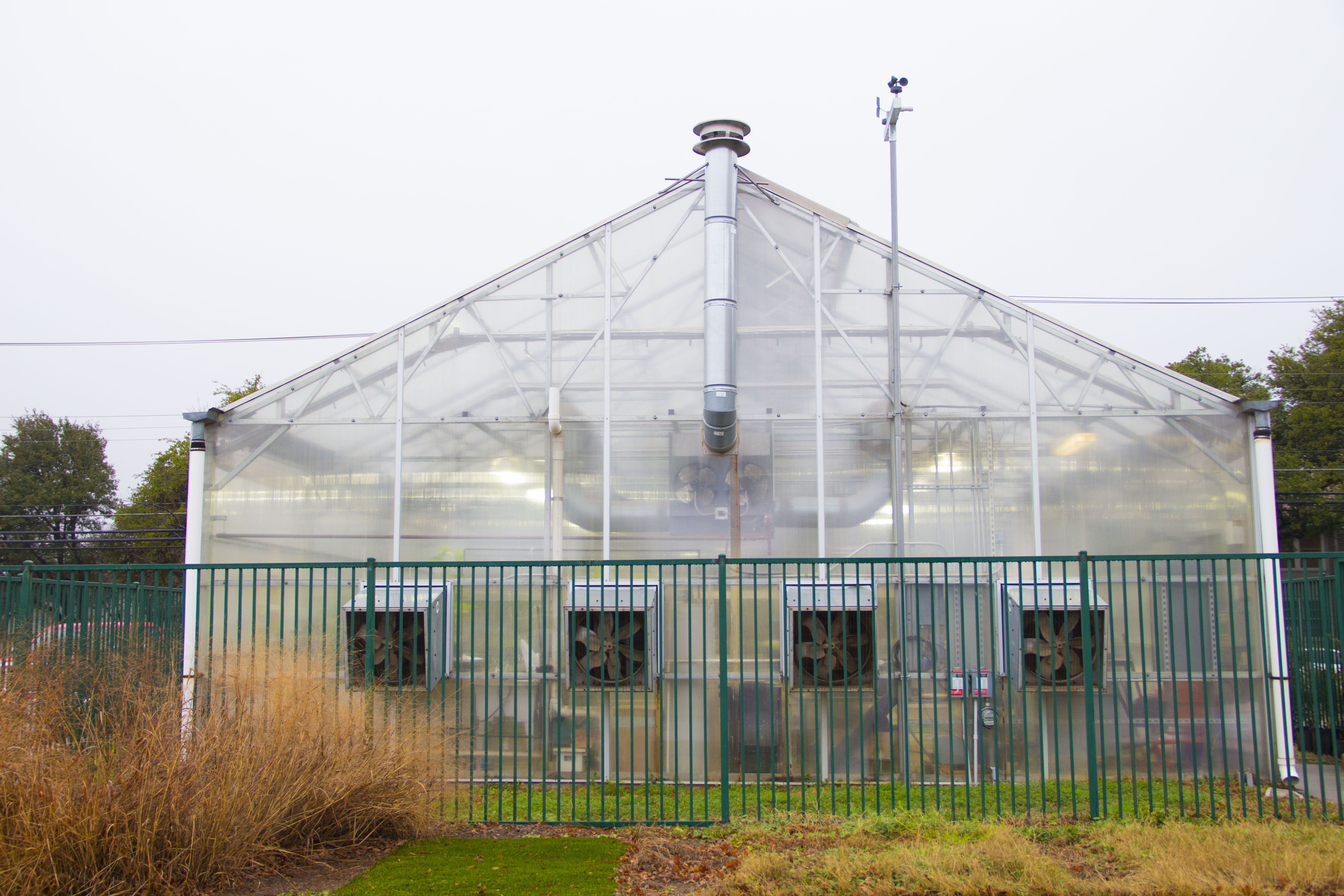
The greenhouse located outside of UNT’s Environmental Science Building. 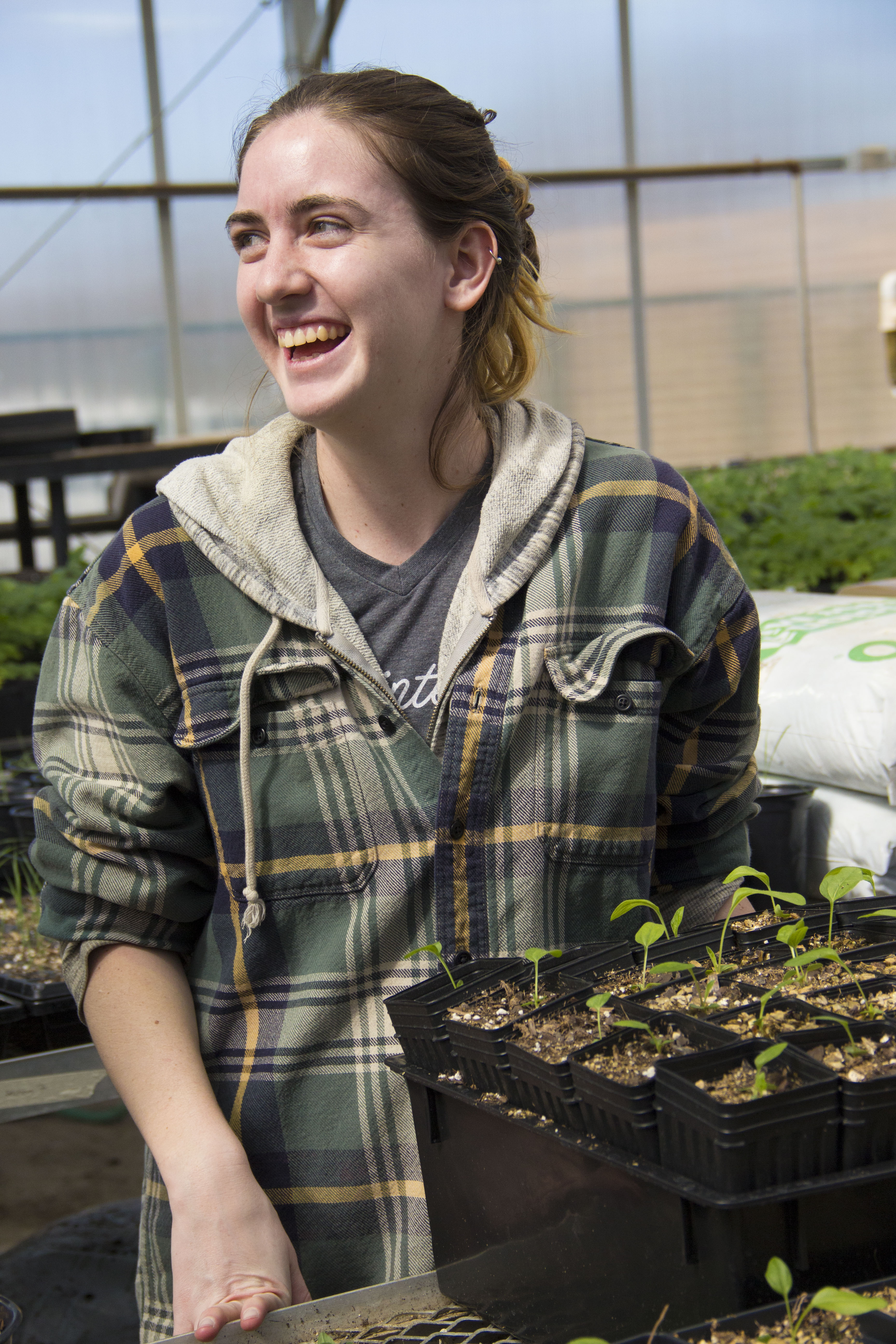
Molly Burke thinning out plants at the greenhouse.
DENTON- Just outside of the Environmental Science Building at the University of North Texas, is a greenhouse that houses many native Texas plants. The plants have sprouted revealing small green leaves in each individual pot.
The Greenhouse Project, started last year but has recently gained access to the greenhouse in January by UNT student Molly Burke.
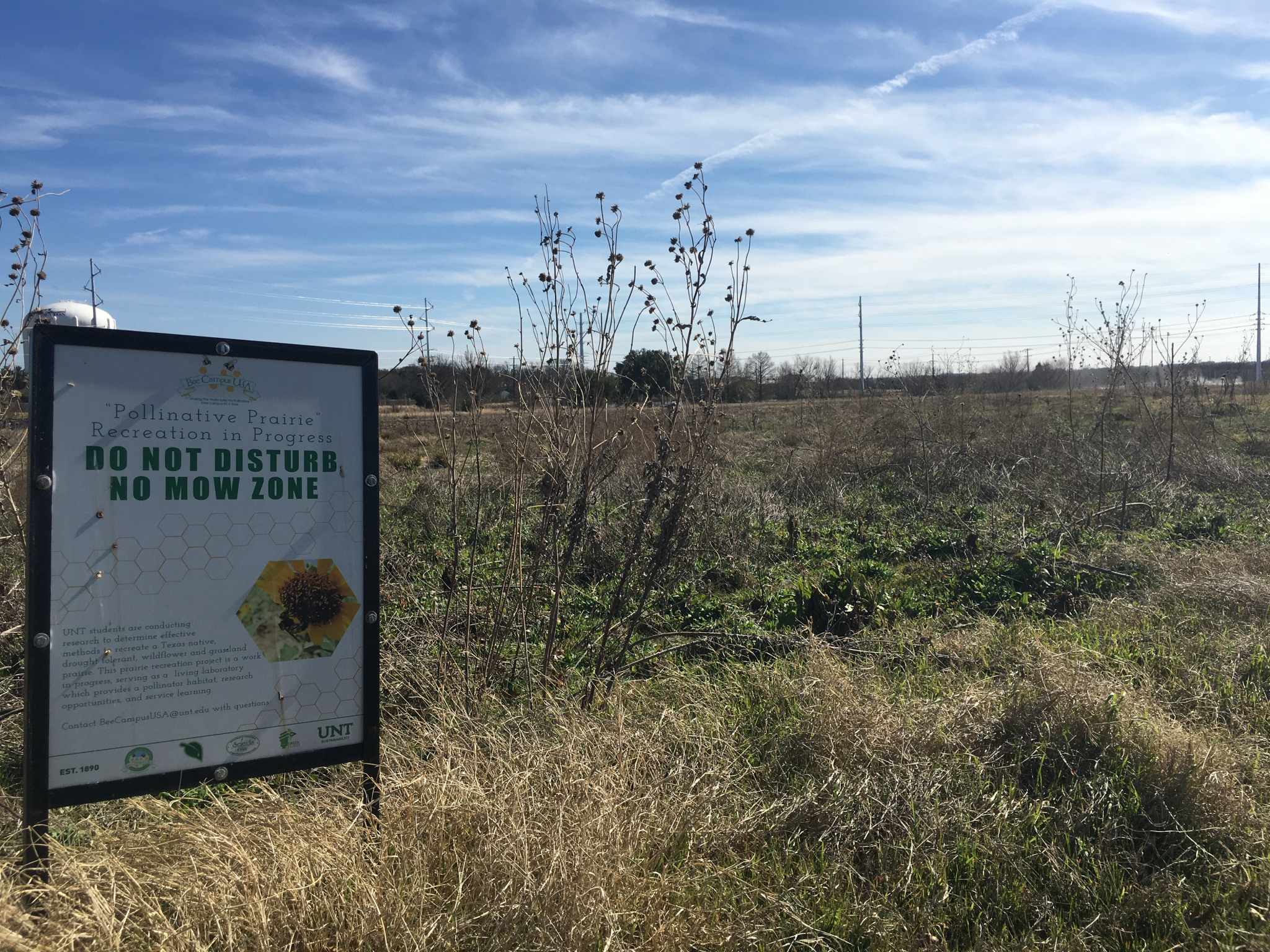
The project’s main focus is to find out how the roots and structure of a plant are affected by different pot sizes but will also benefit a restoration prairie sight located at Discovery Park aimed at supporting pollinators such as bees.
Burke is a senior majoring in ecology who serves as vice president of Strategies for Ecological Education, Diversity and Sustainability as well as representative of Bee Campus USA which both advocate for the environment and have helped pollinators’ success. The Greenhouse Project however, holds a special place in her heart.
“It’s pretty cool, the scale that we’re doing this restoration project at and the timeline that we’re doing it in has never been done this quickly before,” Burke said.
Burke is working with seven different Texas native plant species to find out what pot size works best.
A professor of ecology and environmental science Jaime Baxter-Slye Ph.D, helped Burke request funding through the We Mean Green fund to make the project possible. The We Mean Green fund is a UNT student organization that helps fund environmentally friendly projects on campus upon request and approval.
Slye has helped manage the funds and says that it is more cost efficient to grow plants in a nursery rather than spreading seeds on an acre.
“If we can learn to do that well, then that will be good for the prairie going forward,” Slye said.
President and volunteer of the Society for Ecological Restoration, Mattie Mitchell, says the organization is in charge of the prairie as it tries to come up with more efficient ways to bring back native Texas plants.
“As volunteers, our big thing is keeping native plants added to prairies and what [Molly] is trying to do is find the best way she can incorporate those native plants back into Texas prairies,” Mitchell said.
Getting the word out about volunteer events and workdays at the prairie is another challenge Molly and regular student volunteers still face. With as few as 10 to 20 regular volunteers, Mitchell says there is a lack of student diversity. By involving other student departments outside of the ecology department, Mattie said diversity can be achieved.
“Our professors like to message only the internal ecology students but we’re trying to find ways to better reach out to the English department, the philosophy department and geography,” Mitchell said.
About 1,000 plants are being prepared for the predicted workday on April 27 this year by the time the greenhouse plants are ready, Burke’s project hopes to attract many volunteers.
“It would be really cool if we could kind of merge students and have people that maybe aren’t ecology students come out and help us,” Burke said.

 JaeNews